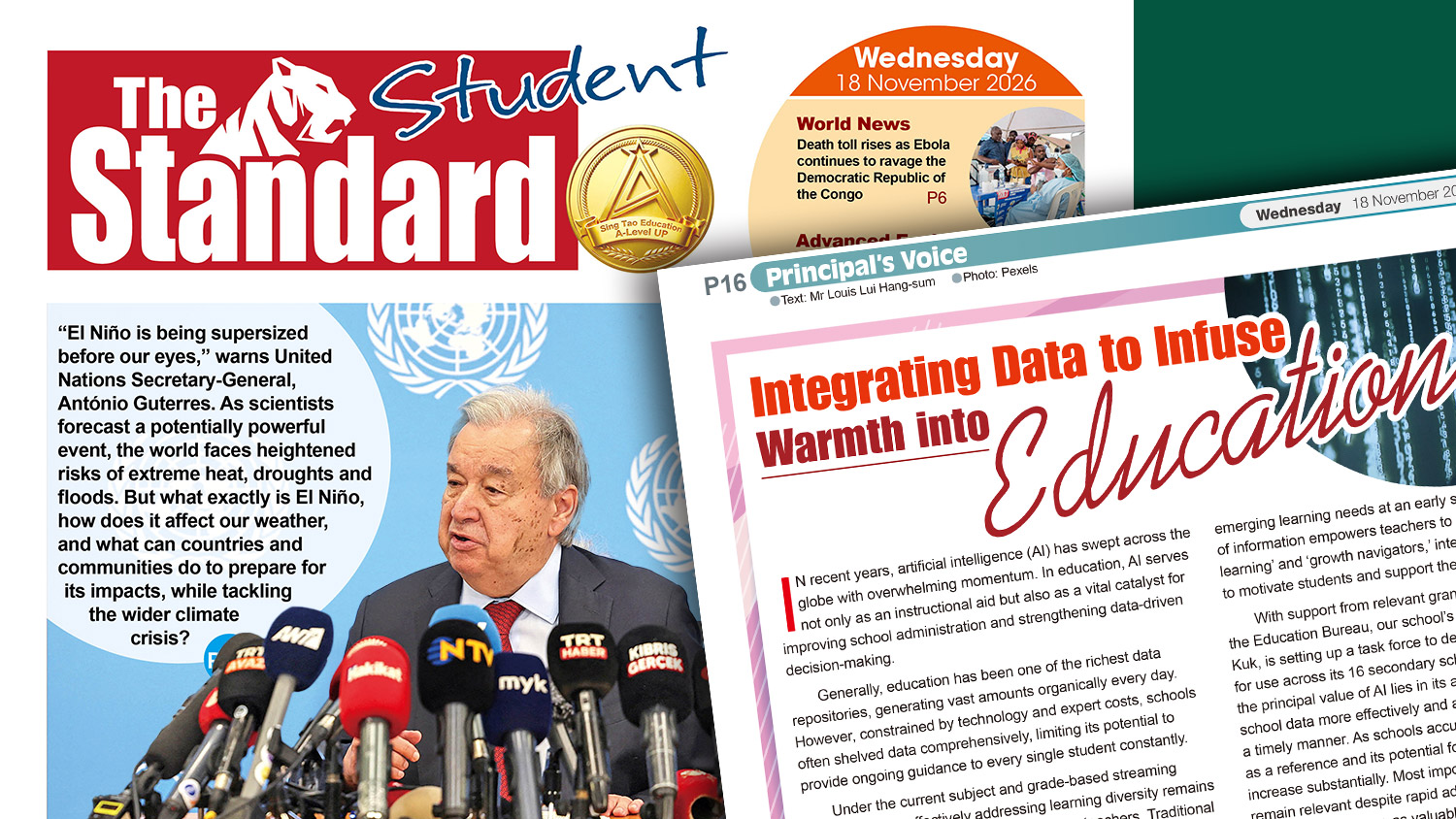
Integrating Data to Infuse Warmth into Education
23 Nov 2026
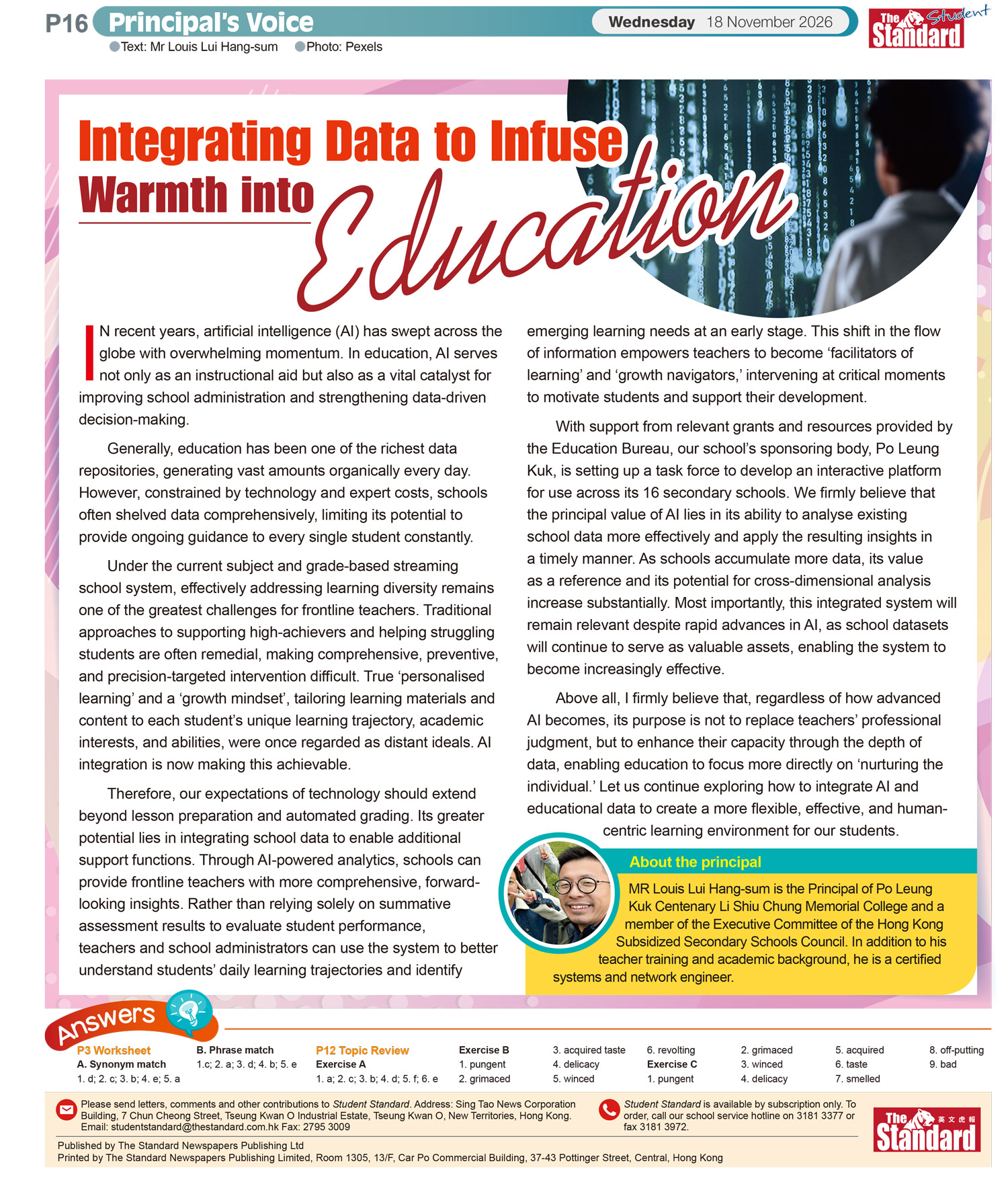 In recent years, artificial intelligence (AI) has swept across the globe with overwhelming momentum. In education, AI serves not only as an instructional aid but also as a vital catalyst for improving school administration and strengthening data-driven decision-making.
Generally, education has been one of the richest data repositories, generating vast amounts organically every day. However, constrained by technology and expert costs, schools often shelved data comprehensively, limiting its potential to provide ongoing guidance to every single student constantly.
Under the current subject and grade-based streaming school system, effectively addressing learning diversity remains one of the greatest challenges for frontline teachers. Traditional approaches to supporting high-achievers and helping struggling students are often remedial, making comprehensive, preventive, and precision-targeted intervention difficult. True ‘personalised learning’ and a ‘growth mindset’, tailoring learning materials and content to each student’s unique learning trajectory, academic interests, and abilities, were once regarded as distant ideals. AI integration is now making this achievable.
Therefore, our expectations of technology should extend beyond lesson preparation and automated grading. Its greater potential lies in integrating school data to enable additional support functions. Through AI-powered analytics, schools can provide frontline teachers with more comprehensive, forward-looking insights. Rather than relying solely on summative assessment results to evaluate student performance, teachers and school administrators can use the system to better understand students’ daily learning trajectories and identify emerging learning needs at an early stage. This shift in the flow of information empowers teachers to become ‘facilitators of learning’ and ‘growth navigators,’ intervening at critical moments to motivate students and support their development.
With support from relevant grants and resources provided by the Education Bureau, our school’s sponsoring body, Po Leung Kuk, is setting up a task force to develop an interactive platform for use across its 16 secondary schools. We firmly believe that the principal value of AI lies in its ability to analyse existing school data more effectively and apply the resulting insights in a timely manner. As schools accumulate more data, its value as a reference and its potential for cross-dimensional analysis increase substantially. Most importantly, this integrated system will remain relevant despite rapid advances in AI, as school datasets will continue to serve as valuable assets, enabling the system to become increasingly effective.
Above all, I firmly believe that, regardless of how advanced AI becomes, its purpose is not to replace teachers’ professional judgment, but to enhance their capacity through the depth of data, enabling education to focus more directly on ‘nurturing the individual.’ Let us continue exploring how to integrate AI and educational data to create a more flexible, effective, and human-centric learning environment for our students.
Principal’s Voice (P16, The Student Standard) | Wednesday, 18 November 2026
Text: Mr Louis Lui Hang-sum
Photo: Pexels
In recent years, artificial intelligence (AI) has swept across the globe with overwhelming momentum. In education, AI serves not only as an instructional aid but also as a vital catalyst for improving school administration and strengthening data-driven decision-making.
Generally, education has been one of the richest data repositories, generating vast amounts organically every day. However, constrained by technology and expert costs, schools often shelved data comprehensively, limiting its potential to provide ongoing guidance to every single student constantly.
Under the current subject and grade-based streaming school system, effectively addressing learning diversity remains one of the greatest challenges for frontline teachers. Traditional approaches to supporting high-achievers and helping struggling students are often remedial, making comprehensive, preventive, and precision-targeted intervention difficult. True ‘personalised learning’ and a ‘growth mindset’, tailoring learning materials and content to each student’s unique learning trajectory, academic interests, and abilities, were once regarded as distant ideals. AI integration is now making this achievable.
Therefore, our expectations of technology should extend beyond lesson preparation and automated grading. Its greater potential lies in integrating school data to enable additional support functions. Through AI-powered analytics, schools can provide frontline teachers with more comprehensive, forward-looking insights. Rather than relying solely on summative assessment results to evaluate student performance, teachers and school administrators can use the system to better understand students’ daily learning trajectories and identify emerging learning needs at an early stage. This shift in the flow of information empowers teachers to become ‘facilitators of learning’ and ‘growth navigators,’ intervening at critical moments to motivate students and support their development.
With support from relevant grants and resources provided by the Education Bureau, our school’s sponsoring body, Po Leung Kuk, is setting up a task force to develop an interactive platform for use across its 16 secondary schools. We firmly believe that the principal value of AI lies in its ability to analyse existing school data more effectively and apply the resulting insights in a timely manner. As schools accumulate more data, its value as a reference and its potential for cross-dimensional analysis increase substantially. Most importantly, this integrated system will remain relevant despite rapid advances in AI, as school datasets will continue to serve as valuable assets, enabling the system to become increasingly effective.
Above all, I firmly believe that, regardless of how advanced AI becomes, its purpose is not to replace teachers’ professional judgment, but to enhance their capacity through the depth of data, enabling education to focus more directly on ‘nurturing the individual.’ Let us continue exploring how to integrate AI and educational data to create a more flexible, effective, and human-centric learning environment for our students.
Principal’s Voice (P16, The Student Standard) | Wednesday, 18 November 2026
Text: Mr Louis Lui Hang-sum
Photo: Pexels

Integrating Data to Infuse Warmth into Education
23 Nov 2026
In recent years, artificial intelligence (AI) has swept across the globe with overwhelming momentum.

【香港經濟日報 】 DSE放榜2026|ADHD自閉生視同窗為目標終考第一 屯門基層學霸老best同獲劍橋取錄
14 Jul 2026
【DSE放榜2026/保良局百周年李兆忠紀念中學】2026年中學文憑試(DSE)本周三放榜,屯門保良局百周年李兆忠紀念中學應屆考生方濼民和黎日朗,手握英國劍橋大學的「有條件取錄通知」,兩位男生都說有信心!

【香港仔 】同窗科研拍住上 兩港生負笈劍橋
14 Jul 2026
來自基層家庭的黎日朗是保良局百周年李兆忠紀念中學DSE應屆考生,自小對科學充滿興趣,中學後亦把握線上線下多元教學資源,靠優異成績與亮眼活動成就
【香港01 】DSE放榜|一個出身基層、一個有多項SEN 同獲劍橋大學有條件取錄
14 Jul 2026
【DSE放榜】保良局百周年李兆忠紀念中學兩位應屆DSE中學文憑試考生黎日朗與方濼民,背景與成長困境不同:一位出身基層公屋;一位自幼體弱多病,患有ADHD及輕度自閉症,是SEN(特殊學習需要)學生。



Related
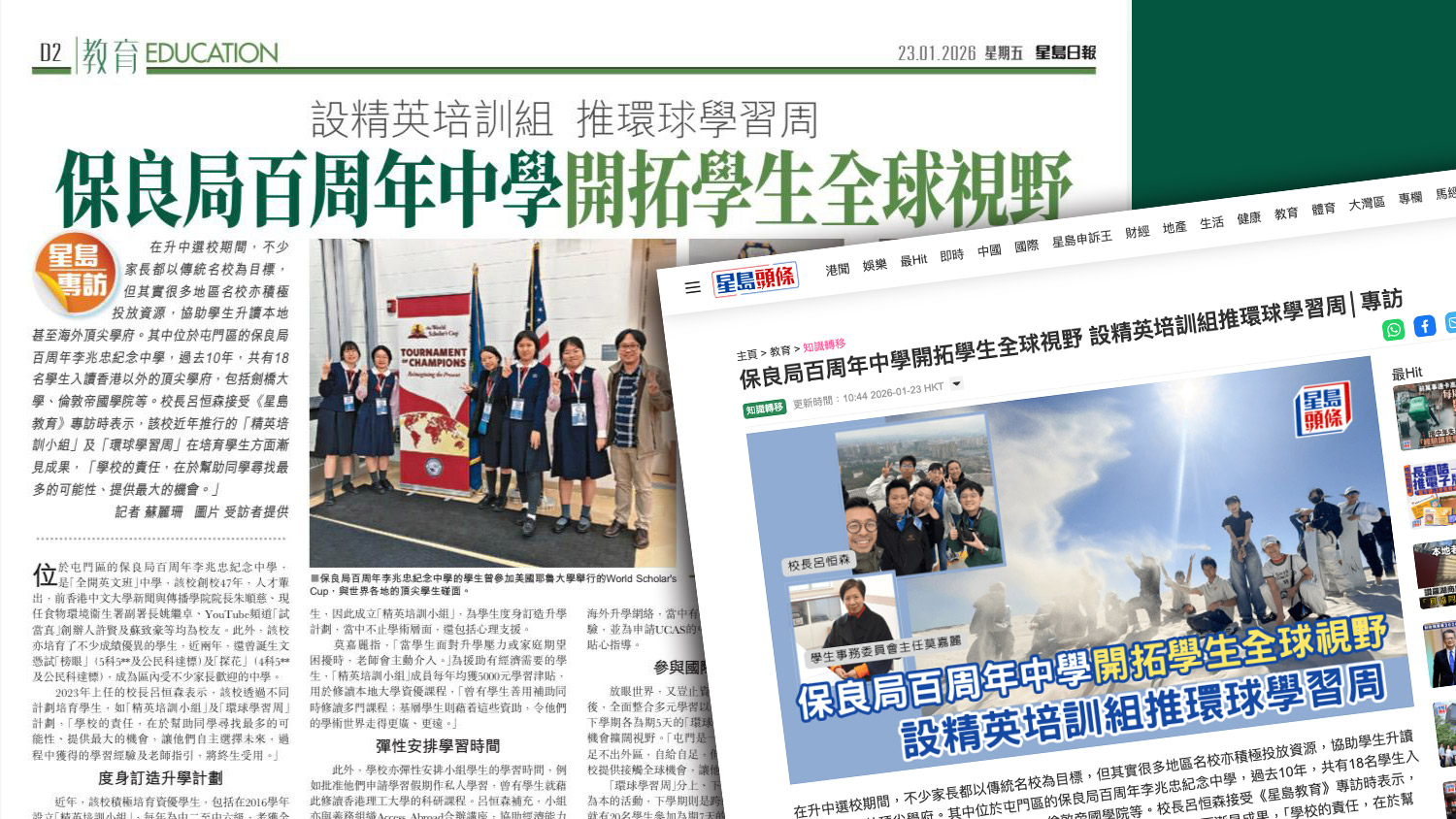
保良局百周年中學開拓學生全球視野-設精英培訓組推環球學習周專訪
23 Jan 2026
在升中選校期間,不少家長都以傳統名校為目標,但其實很多地區名校亦積極投放資源,協助學生升讀本地甚至海外頂尖學府。

【香港文匯報 】同窗科研「拍住上」 克服困難升劍橋
14 Jul 2026
「即使出身基層,也不會妨礙我去探索這個世界。」來自公屋基層家庭的黎日朗,是保良局百周年李兆忠紀念中學DSE應屆考生。
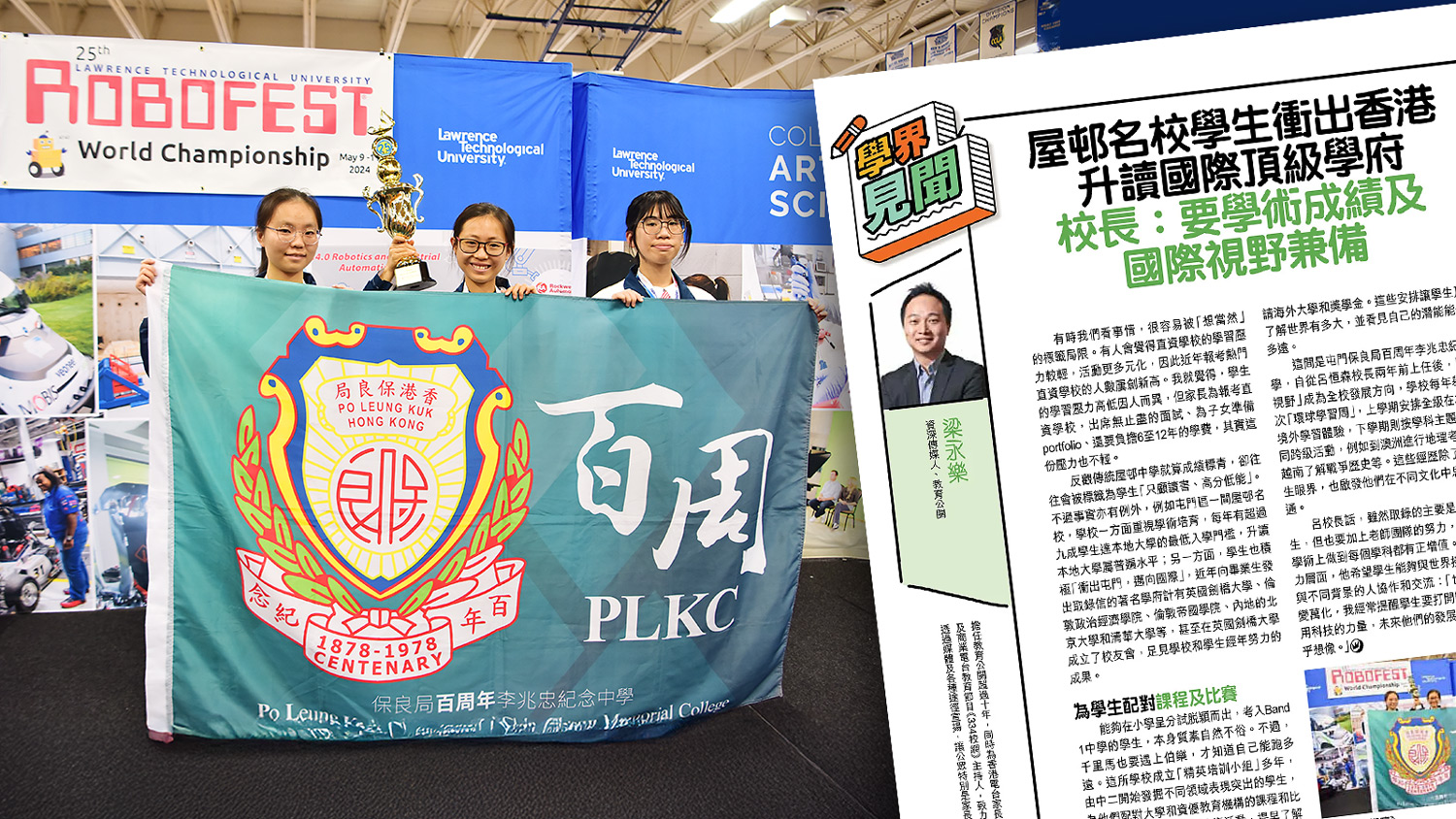
屋邨名校學生衝出香港升讀國際頂級學府|校長:要學術成績及國際視野兼備
05 Nov 2025
有時我們看事情,很容易被「想當然」 的標籤局限。有人會覺得直資學校的學習壓 力較輕,活動更多元化,因此近年報考熱門 直資學校的人數屢創新高。

校長專訪|保良局百周年中學特設小組 助學生升讀海外頂尖大學
10 Jan 2024
屯門保良局百周年李兆忠紀念中學深受家長歡迎,於剛過去的2023年度聯招(JUPAS)達到所有參與聯招的學生均獲派位之外,更幾乎每年都有學生負笈海外升讀頂尖大學。本學年(2023/24)新上任的校長呂恒森接受「01教育」專訪時介紹學校學生事務處屬下的的精英培訓小組,該小組以發展優秀學生潛質為目標,亦會指導校內精英學生報讀海外知名學府,並提供相關支援,包括協助申請獎學金。他又提到,學校重視對學生的升學及就業輔導,幫助他們尋找志向。

【星島頭條】特教生克服身心挑戰 與尖子同窗負笈劍橋
14 Jul 2026
先天心臟病、過度活躍症(ADHD)加上輕度自閉症,三重身心挑戰,令應屆文憑試考生方濼民的學習路上困難重重